
Hello, I’m a Mixed-Methods UX Researcher with 9 years of experience.
For the past 5 years, I’ve worked at the forefront of AI, bringing a strategic and thoughtful lens to a fast-evolving landscape.
I specialize in cutting through ambiguity to identify high-leverage research opportunities. I deliver sharp, actionable insights that tie to business impact, shape long-term product vision, and drive success.

PROJECTS

Unblocking Generative AI Adoption
Led mixed-methods research that drove AI portfolio changes, saving customers 15 to 20 hours of setup time per week
What I Did
Triangulated qualitative and quantitative research (surveys, interviews, and journey maps) to identify the top 20 friction points in ServiceNow’s conversational AI setup experience.
Developed a prioritization framework to score and rank these 20 challenges based on dimensions like severity, frequency, user impact, etc.
Co-led 2 cross-functional workshops with 3 UX researchers and 40+ stakeholders to align teams on the highest-priority pain points and co-create future-state solutions.
The Impact
Secured executive funding for 4 new strategic workstreams and dedicated teams tasked with solving the uncovered issues.
Shaped ServiceNow’s 2-year AI vision and long-term product roadmap strategy.
On track to reduce AI setup time by 70%, drastically improving time-to-value for customers.
What I Did
Drove end-to-end strategic mixed-methods research, pairing qualitative and quantitative studies to shape a unified, AI-native setup experience — elevating a team that had historically relied on tactical, qual-only data.
Designed and fielded a MaxDiff prioritization survey testing 22 features with 615 respondents across varying AI maturity, job roles, and company sizes, to rank features by customer value and de-risk the release sequences
Ran two rounds of RITE concept testing with 9 enterprise customers to validate the north-star vision and iteratively refine future-state designs.
The Impact
Shipped publicly in June 2026, establishing Now Assist Center as the new AI-native administration experience for ServiceNow's AI platform, driving research for the product from 0 to 1.
Drove consolidation of 9 of the 10 fragmented AI setup tools into a single experience, saving customers an estimated 4–6 hours per week of AI solution-building time.
Shaped Now Assist Center's 2-year roadmap and strategy — establishing unified AI orchestration, transparency and control as the top needs, and influencing ServiceNow's broader AI Setup & Configuration strategy.
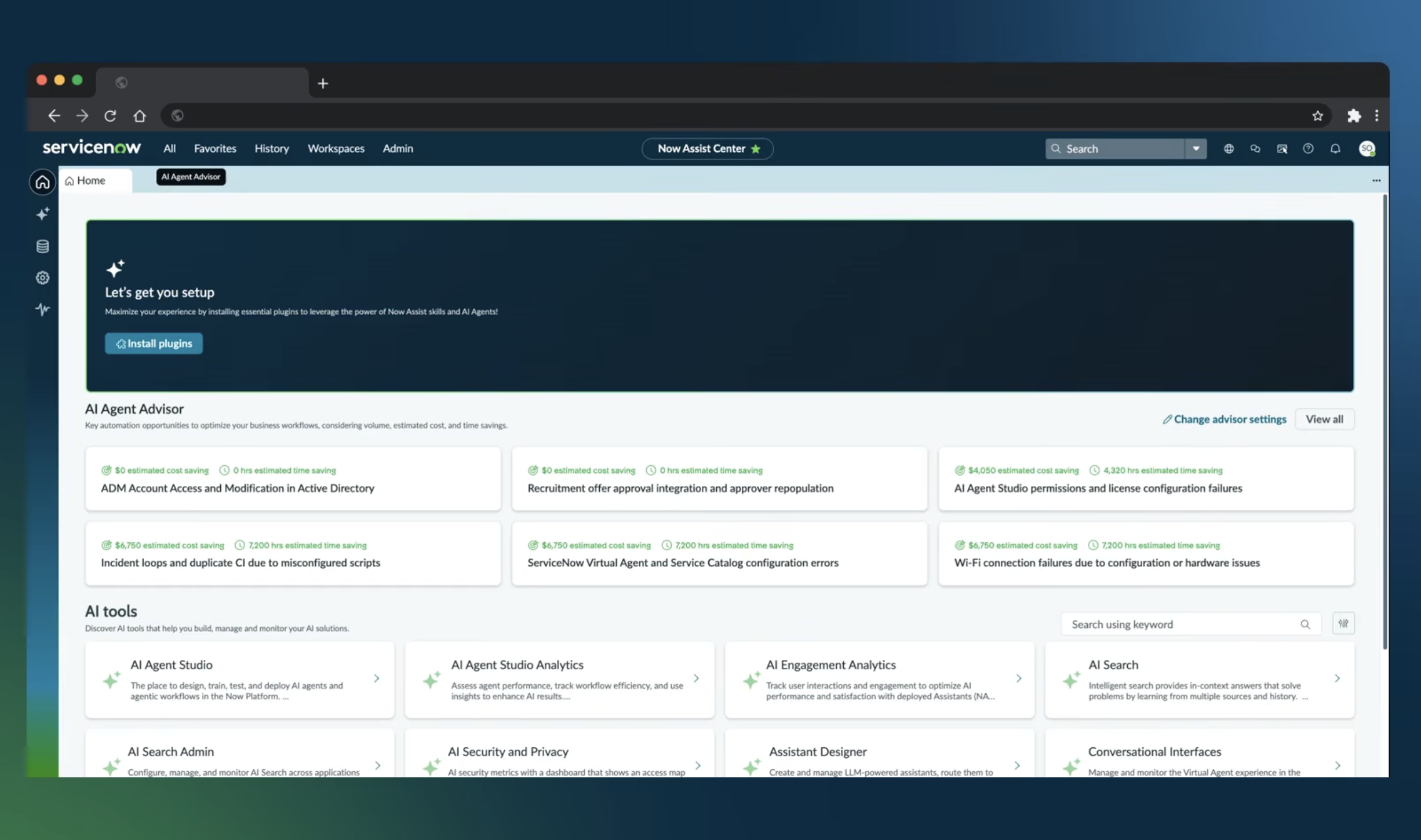
Simplifying ServiceNow’s AI Setup

Lead UX Researcher for AI Admin Center, a 0 to 1 product adopted by 600 customers within 3 months of launch

What I Did
Led end-to-end mixed-methods research of complex behavioral experiments and interviews to map key return-to-office friction points for hybrid collaboration.
Orchestrated 4 distinct physical and digital meeting scenarios, systematically counterbalancing variables like room layouts, multi-device configurations, and face mask protocols to mitigate bias.
Evaluated multi-dimensional criteria including visibility of non-verbal cues, software feature accessibility, conversational turn-taking, and physical space constraints to identify optimal, inclusive hybrid setups.
The Impact
Enabled Google’s post-COVID return-to-office strategy and shaped long-term product vision for hybrid collaboration, sharing key insights at Google’s UX Summit.
Drove hardware space innovation by delivering UX recommendations that led cross-functional teams to deploy new hybrid meeting setups across global offices.
Influenced core software feature roadmaps by identifying severe user inequities, directly launching a product pilot for a "second screen experience" to allow feature access without duplicate video feeds.
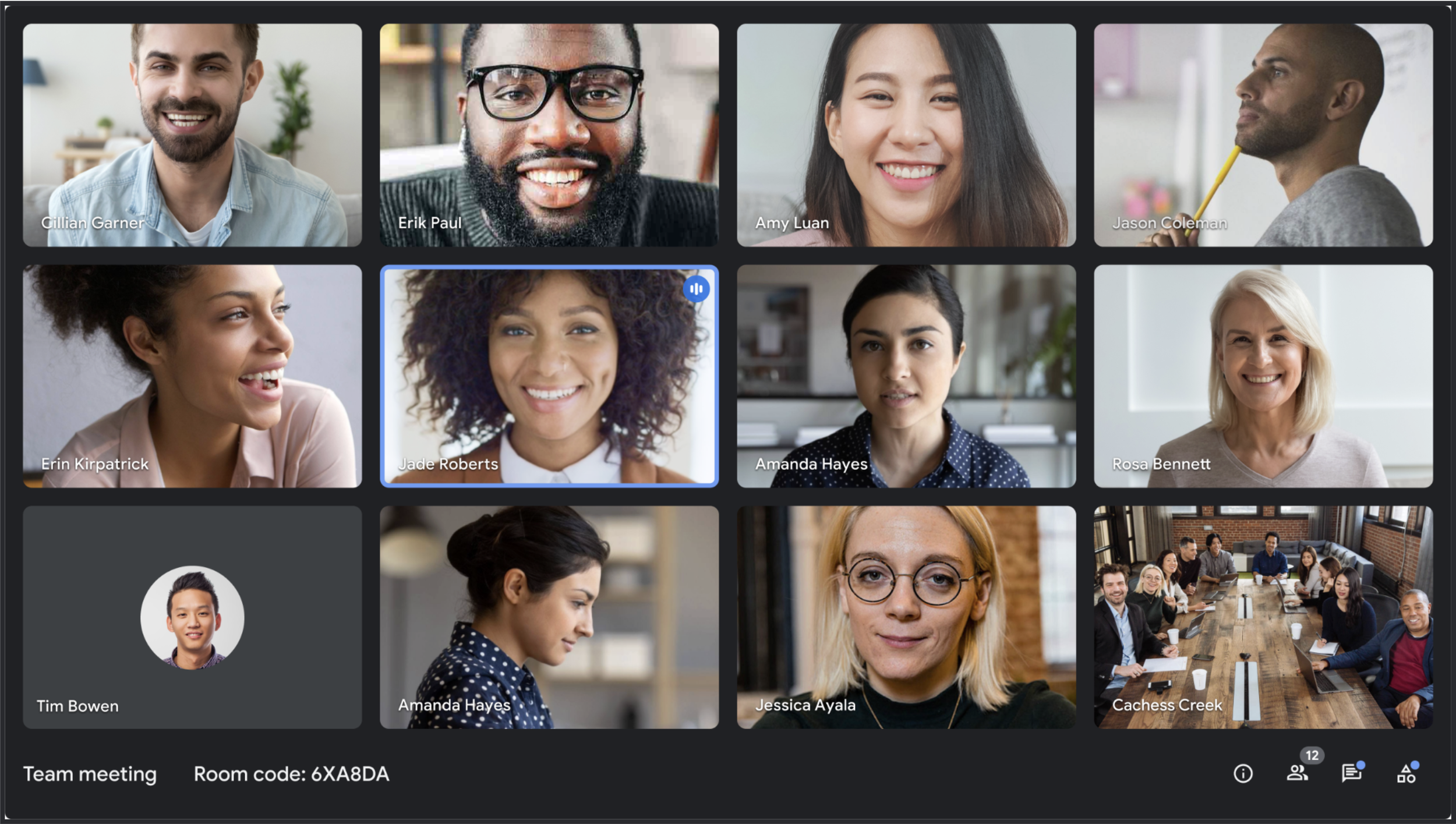
Creating Inclusive Hybrid Spaces
Shaped inclusive hybrid meeting setups for 120,000 Googlers returning to the office after the pandemic

What I Did
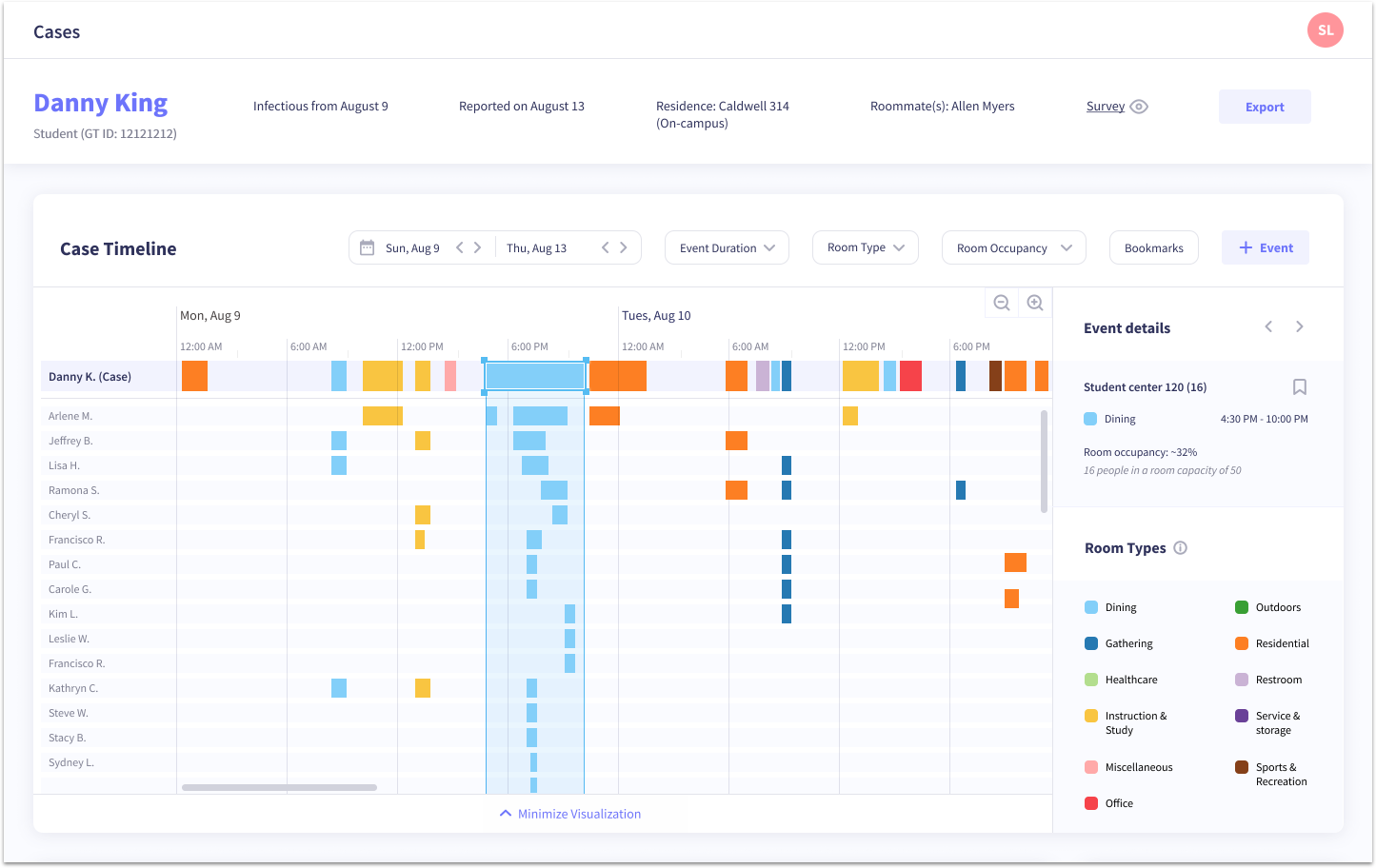
Scoped and conducted interviews, literature reviews, concept testing, and persona research in partnership with designers, health scientists, PMs, and professors to understand how Georgia Tech health workers identified individuals at risk of COVID-19 exposure.
Translated research findings into app requirements and core feature definitions for a dashboard that helped health workers quickly narrow down who among up to 1,000 potential contacts needed urgent outreach—before they unknowingly spread the virus further.
Validated three fundamental dashboard features through iterative concept testing—a sortable case overview, a calendar-based dwelling timeline, and a collocation detail view—ensuring every design decision matched how health workers assessed risk in practice.
The Impact
Enabled a safer campus for roughly 10,000 students and staff when Georgia Tech transitioned from remote to in-person learning in Spring 2021.
Reduced a complex, high-stakes decision—identifying the most at-risk people out of up to 1,000 potential contacts per case—down to a manageable, prioritized shortlist that matched the Health Department's capacity.
Directly shaped how Georgia Tech's Health Department identified and reached the most vulnerable individuals during one of the most critical periods of the pandemic.
Protecting Campus During COVID-19
Drove research for a contact-tracing dashboard that helped 10,000 Georgia Tech students safely return to campus

What I Did
Scoped and conducted end-to-end research with participants with and without vision impairments, using literature reviews, persona research, and RITE usability testing.
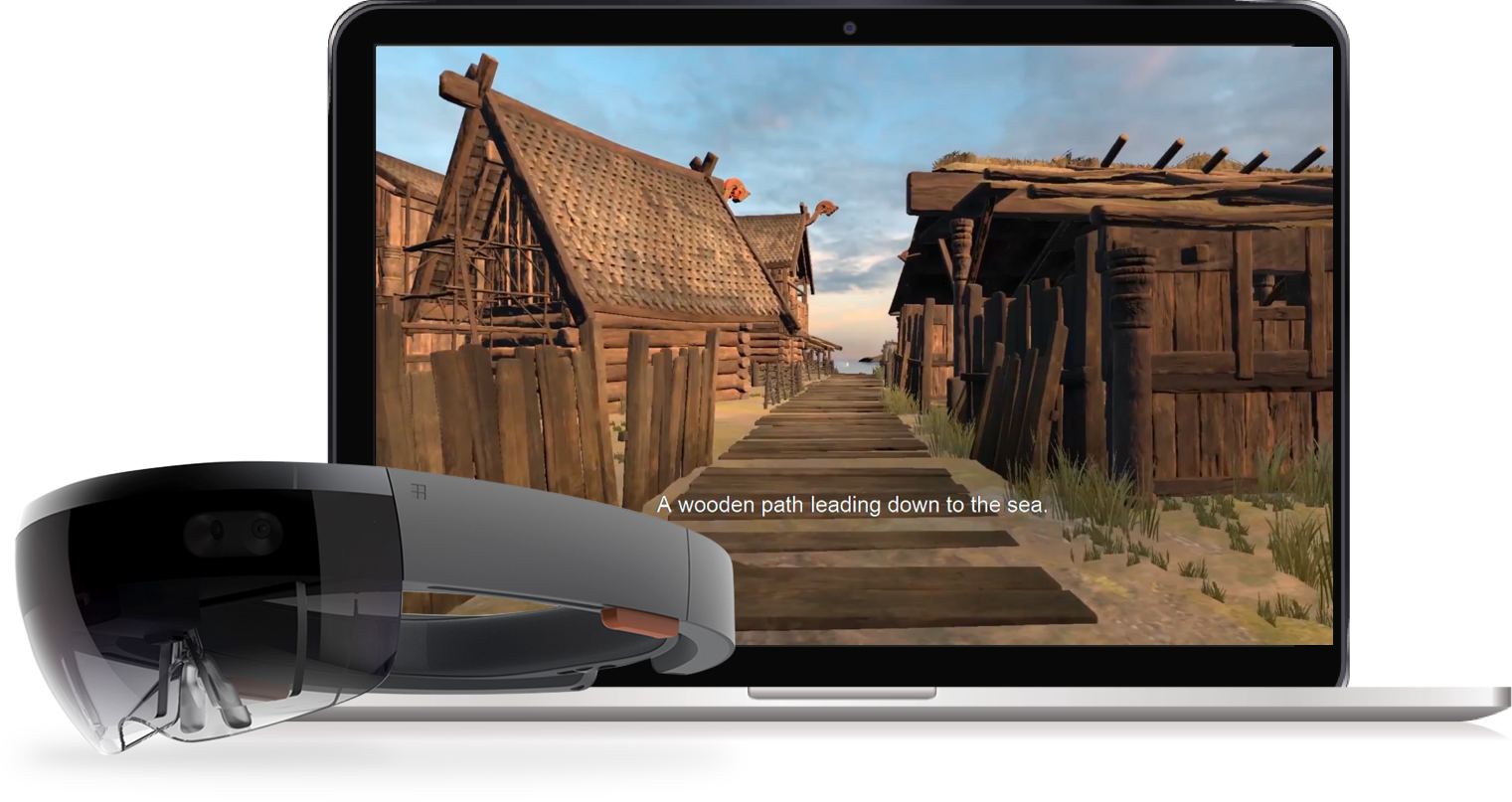
Designed, developed, and tested a spatial audio framework of 5 accessibility features for PC and Microsoft HoloLens in Unity—including a first-person adventure game and novel 3D spatial audio interfaces to help vision-impaired players navigate effectively.
Ran a comparative study of how participants built cognitive maps and navigated in a real-world environment using HoloLens versus inside the game on PC.
The Impact
Validated spatial audio as a viable navigation aid: 83.33% of vision-impaired users found the framework completely usable, and every participant successfully reached target objects in a virtual game room.
Presented at the ASSETS 2018 conference, and informed the next version of accessibility frameworks for Microsoft HoloLens. [Link to publication]
Defined the roadmap for the project's next iteration by surfacing and prioritizing key orientation and sensemaking issues to fix.
Redefining Video Game Accessibility
Built a spatial audio framework helping vision-impaired players navigate games on PC and HoloLens